Launch offer ends in 23:59:59

Amateur Extra (Element 4): One Drawing per Concept, E0 to E9 65 Sketched Pages, Based on the 2024–2028 Pool

Resonance, Q, time constants, phasors, decibels, transistor symbols, propagation, antennas and the Smith chart: in your notes it's a wall of text. Here every topic fits on one page, with the drawing and what you need to remember. 65 drawn pages.

SHOW ME THE DRAWN PAGES

🔒 Secure checkout · PDF by email · 30-day guarantee

One topic per pagethe drawing shows you the concept and the text walks you through it
65 drawn pages11 parts, from the Element 4 exam to the Smith chart
Up-to-date sources47 CFR Part 97 and the NCVEC 2024–2028 Element 4 pool (4th errata)

This Is What the Pages You Will Study Look Like

One topic per page, the drawing that shows you how it works, and the boxes with what you need to know:

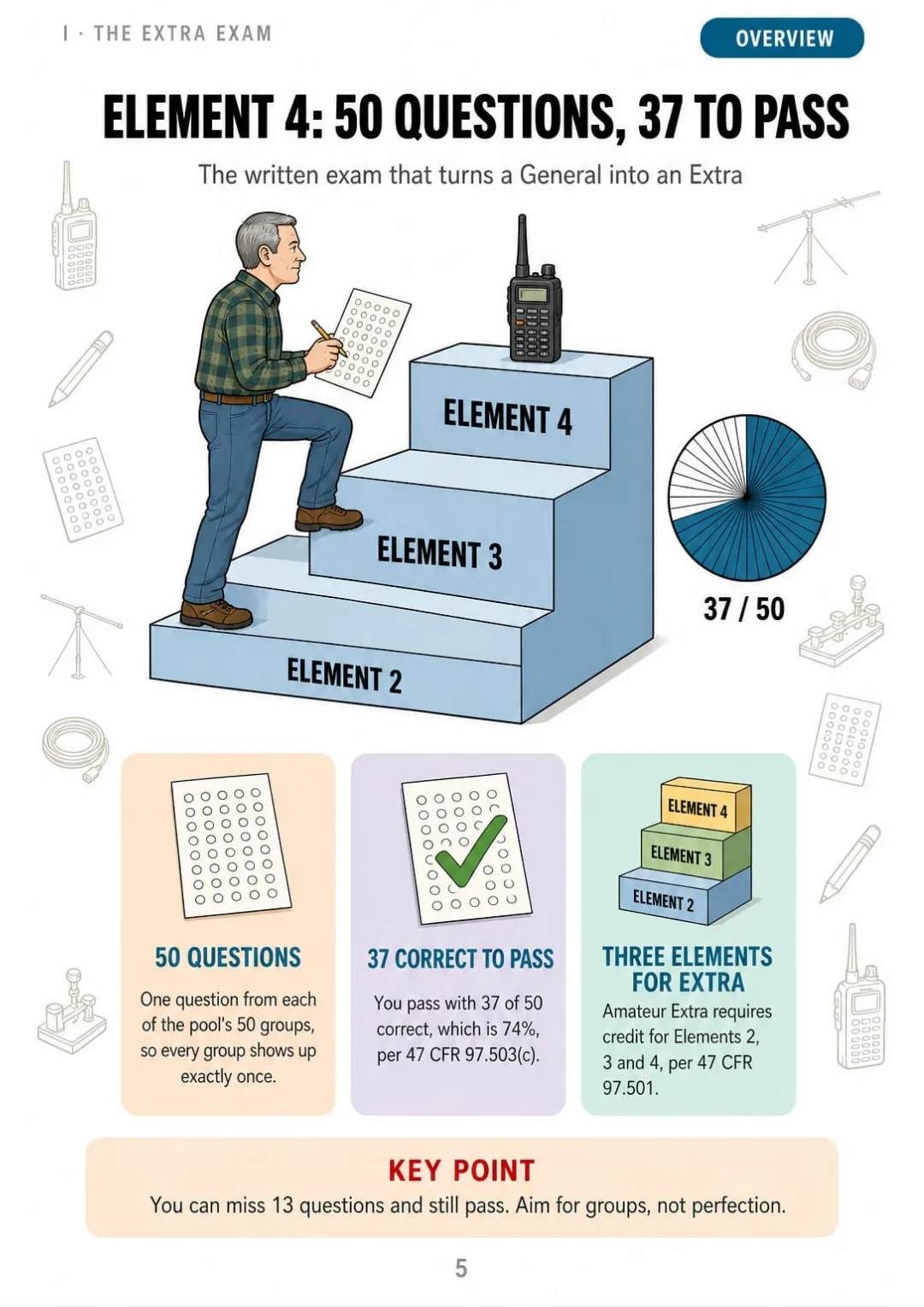
Element 4: 50 questions, 37 correct (74%) to pass, per 47 CFR 97.503(c).
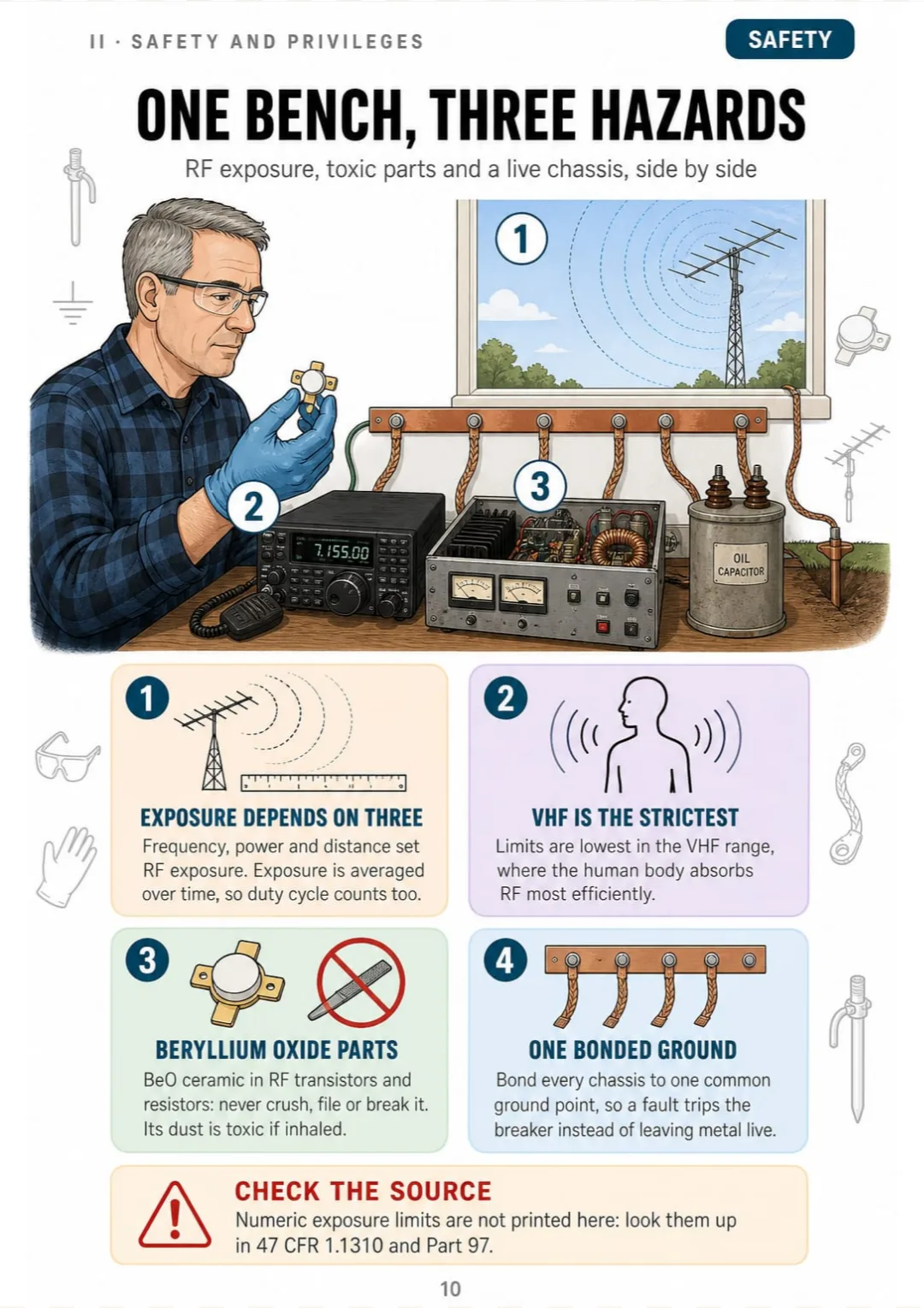
RF exposure depends on frequency, power and distance; BeO parts are never crushed or filed.
Aboard ship or aircraft, the master or pilot in command approves the station (97.11).
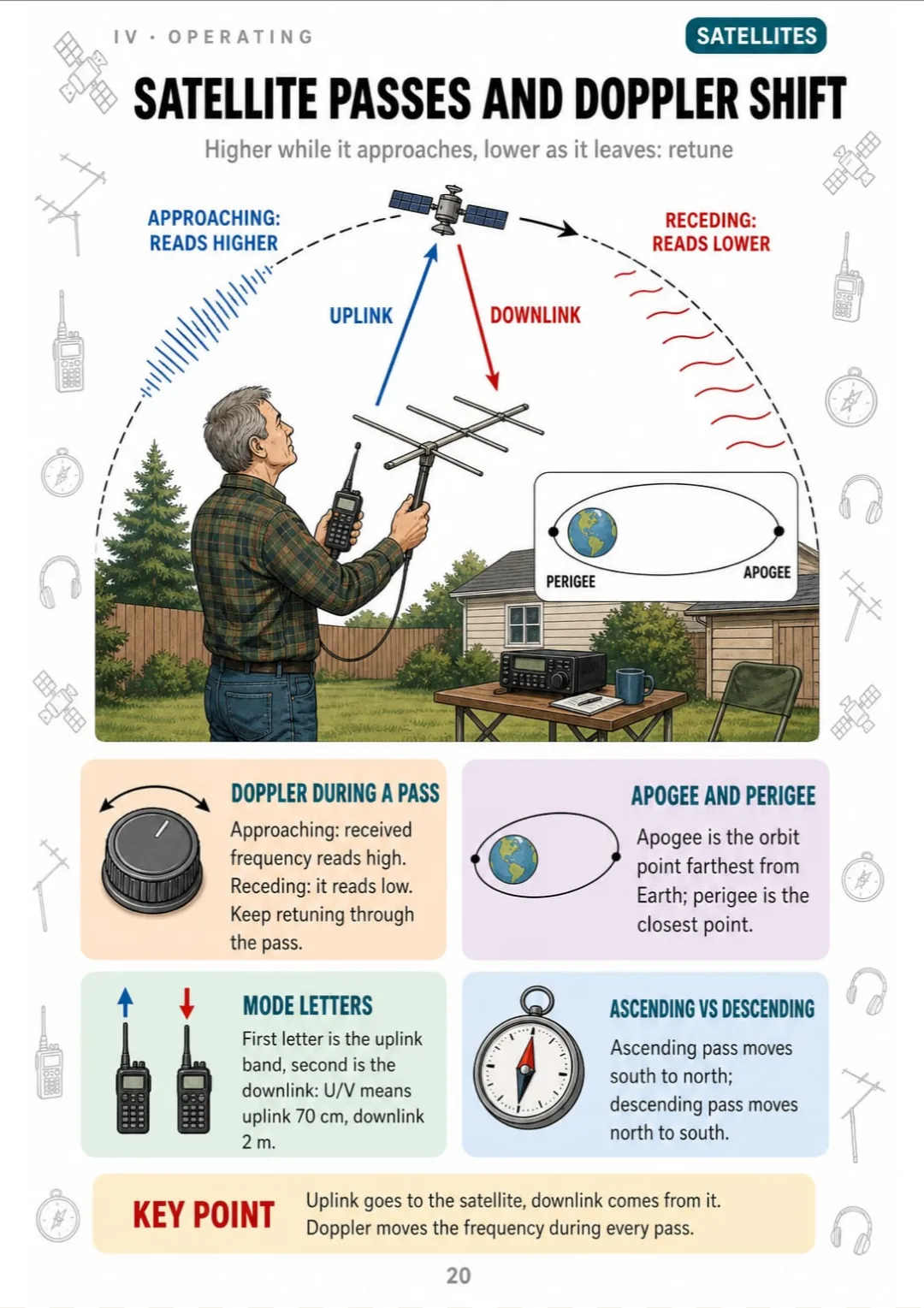
Approaching reads high, leaving reads low: U/V means uplink 70 cm, downlink 2 m.
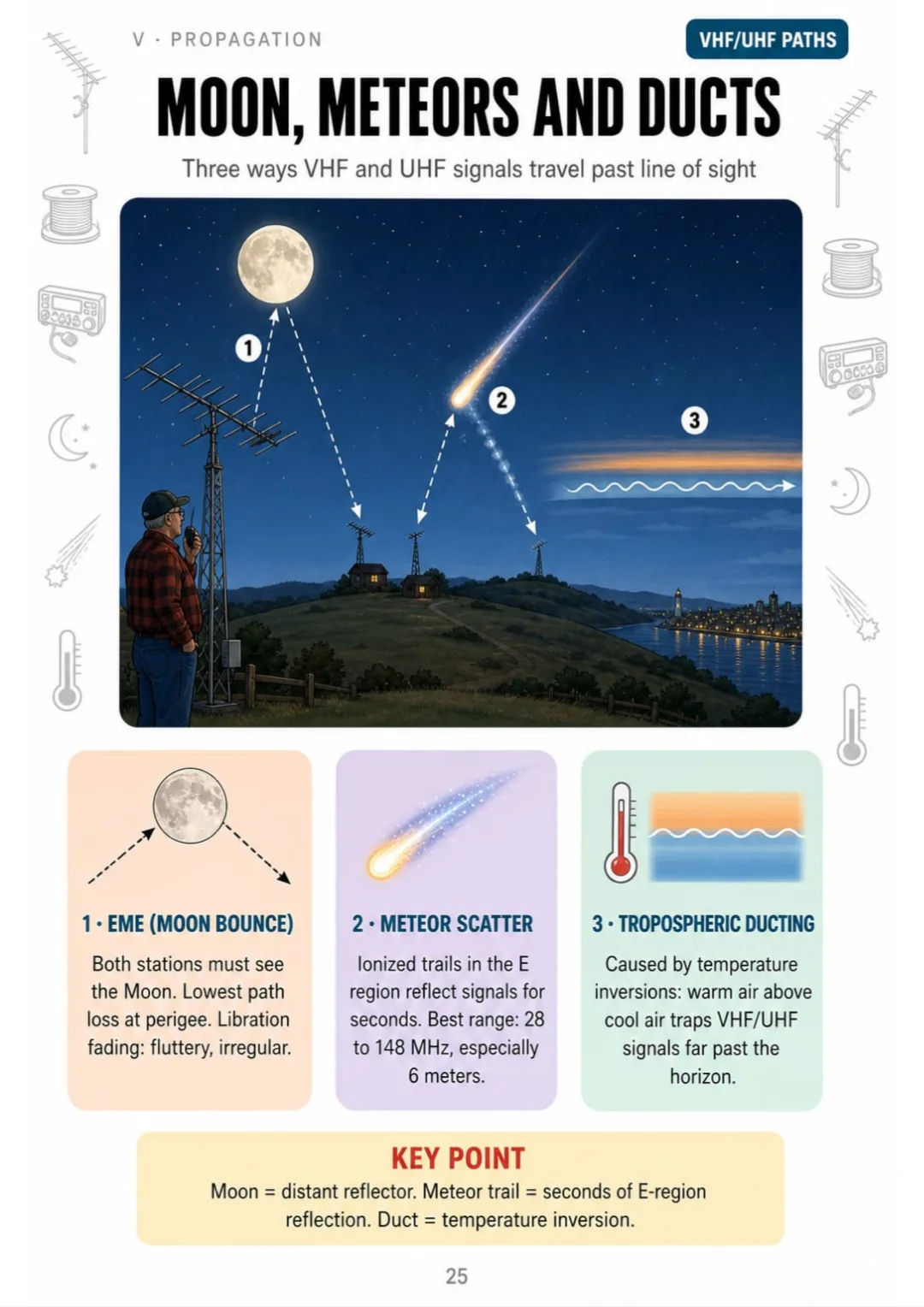
EME, meteor scatter in the E region, and ducting from temperature inversions, on one horizon
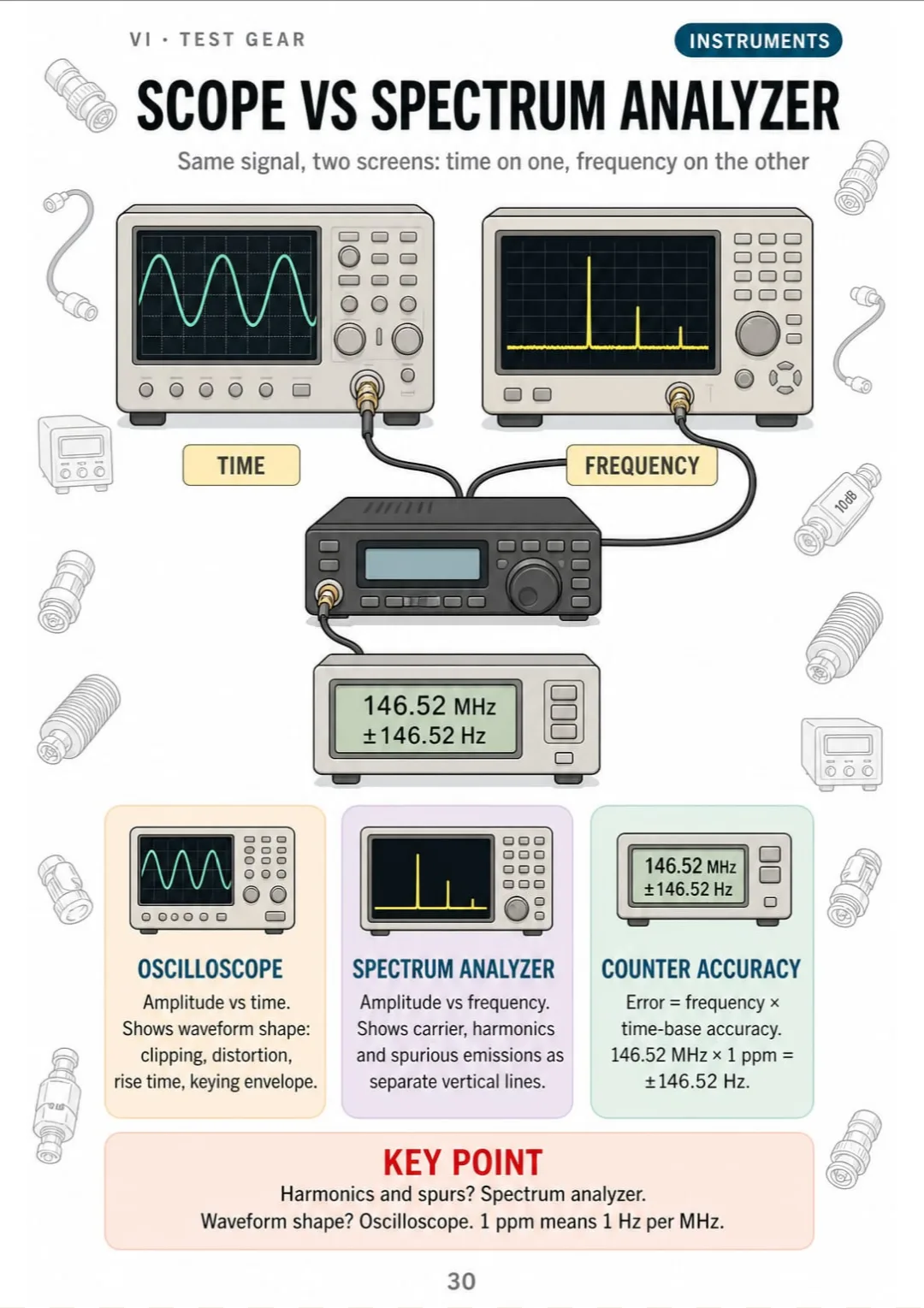
Same signal, two screens, plus the counter math: 1 ppm at 146.52 MHz = ±146.52 Hz
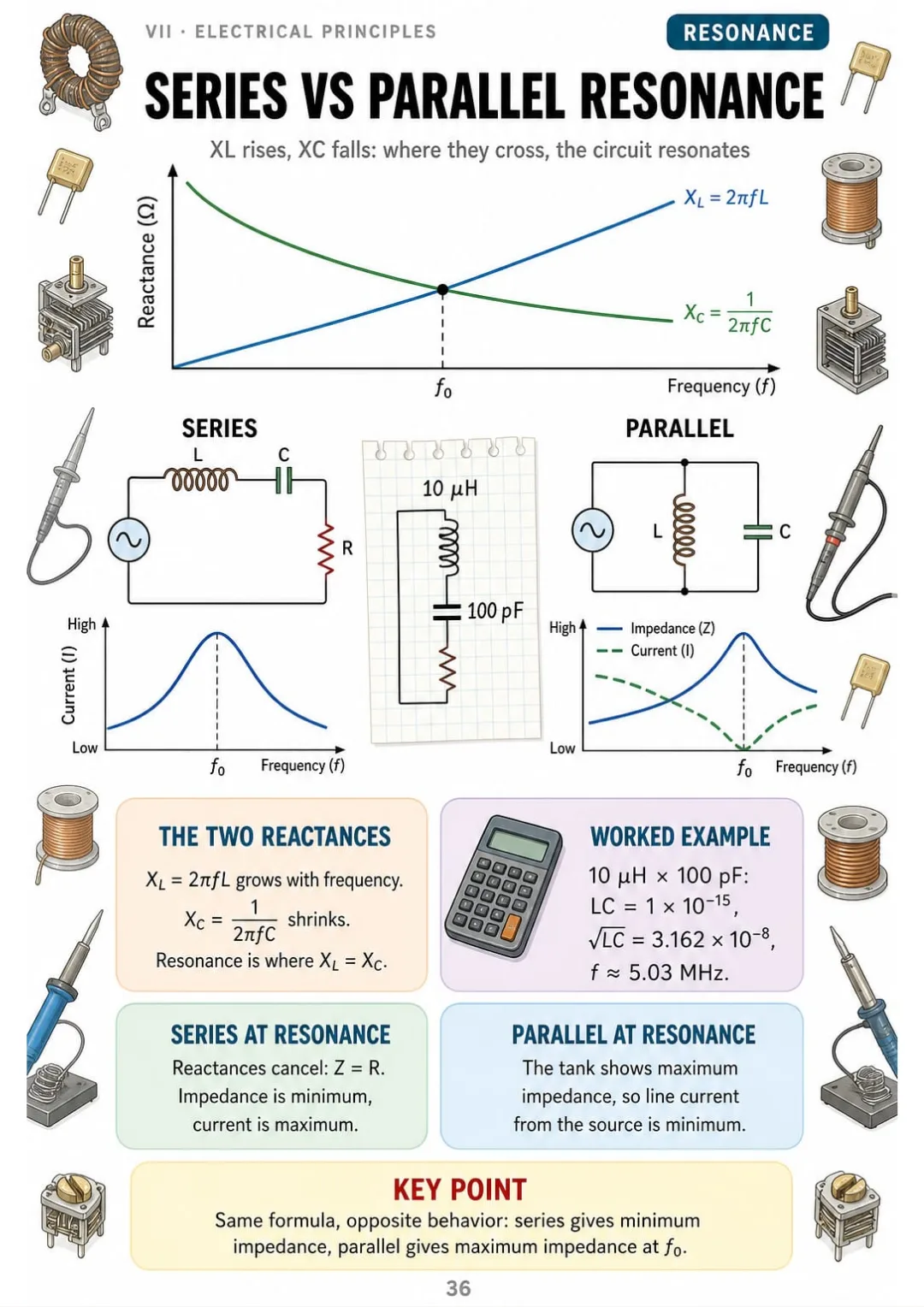
10 µH + 100 pF resonate at about 5.03 MHz: series Z = R, parallel Z is maximum
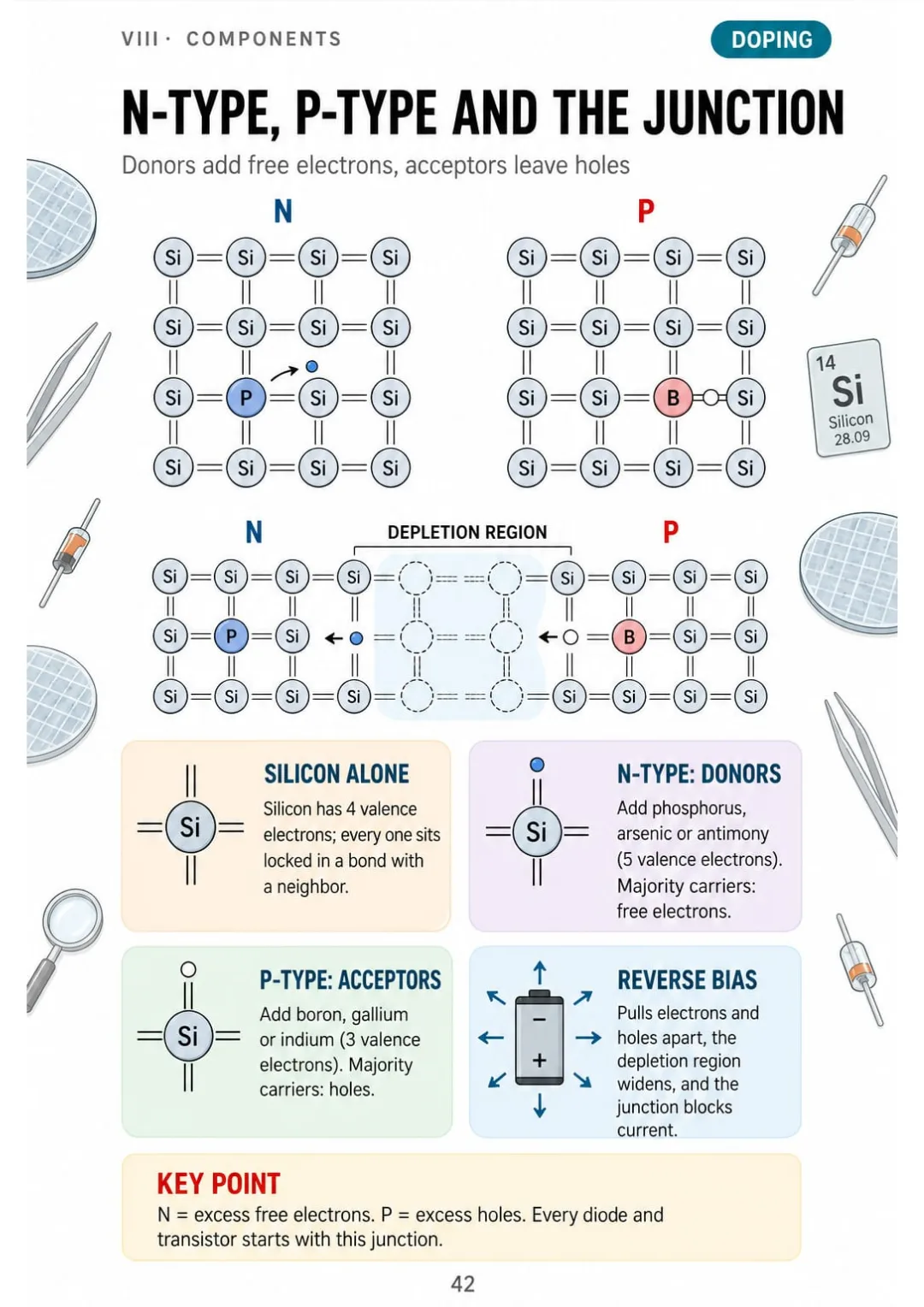
N-type has extra electrons, P-type has holes, and reverse bias widens the depletion region.

Swipe to see more →

These are real pages from the book. The table of contents is the full one: 11 parts and 61 topics.

It's Not You. It's How the Extra Gets Taught: Nobody Put It in Order.

You've read the section on series and parallel resonance three times. You close the manual...

...and you can't remember which one has maximum impedance and which one equals R. It was just one formula after another.

Aboard ship or aircraft, the master or pilot in command approves the station (97.11).

Here resonance is one drawn page: both LC circuits side by side, the curve with the bandwidth marked, and the worked example with real values.

And on the pages next to it, every hard topic has its own: Q and half-power bandwidth, RC and RL time constants, phasors, decibels and the Smith chart.

First you understand why the rule exists. Then the order sticks on its own.

SEE THE DIFFERENCE

Stop Memorizing Rules and Formulas You Can't Picture:

THIS
  • Pages and pages of dense text
  • Formulas and rules without a single drawing
  • On exam day, you don't know where to start
FOR THIS
  • Every concept drawn
  • One topic per page, with the rules in boxes
  • You remember it because you've seen it
RF exposure depends on frequency, power and distance; BeO parts are never crushed or filed.
CONTENTS

Take a Look at the 11 Parts and 61 Topics

The exam, safety and Extra privileges, station rules and the VE program, operating, propagation, test gear and receivers, electrical principles, components, practical circuits, signals and SDR, and antennas with the Smith chart: 65 pages, all drawn

IThe Amateur Extra Exam · pp. 5-9
  1. Element 4 at a Glance: 50 Questions, 37 to Pass
  2. The Ten Subelements and Their Question Counts
  3. The 2024-2028 Pool: Dates and Withdrawn Items
  4. VE Sessions, the CSCE and the 365-Day Window
  5. Exam Day and How to Use This Book
IISafety and Extra Privileges · pp. 10-14
  1. RF Exposure, Hazardous Materials and Grounding
  2. Extra-Only HF Segments Next to General
  3. Sideband Edges: Keeping the Signal Inside
  4. 630 m and 2200 m: PEP and EIRP Limits
  5. 60 m Channels: Carrier vs Center Frequency
IIIStation Rules and the VE Program · pp. 15-19
  1. Ships, Aircraft, Location and Antenna Limits
  2. Remote and Automatic Control, Spurious Limits
  3. Space Stations, Telecommand and Balloons
  4. Inside a VE Team: Who Does What
  5. Amplifiers, Spread Spectrum, Foreign Operators
IVOperating Procedures · pp. 20-24
  1. Satellite Orbits, Modes and Doppler Shift
  2. Fast-Scan and Slow-Scan Television
  3. Contests, DX, Logs and Confirmations
  4. VHF and UHF Digital, APRS, EME, Meteor Scatter
  5. HF Digital Modes Side by Side
VRadio Wave Propagation · pp. 25-29
  1. EME, Meteor Scatter and Tropospheric Paths
  2. Aurora, Daily Ionosphere Cycle, Polarization
  3. Transequatorial, Long-Path and Chordal Hop
  4. Ordinary and Extraordinary Waves, Sporadic E
  5. Radio Horizon and Space-Weather Reports
VITest Gear, Receivers and Noise · pp. 30-35
  1. Spectrum Analyzer vs Oscilloscope Screens
  2. Probes, Accuracy and the Vector Network Analyzer
  3. Noise Floor, MDS, Noise Figure, Phase Noise
  4. Dynamic Range, Intermod, Third-Order Intercept
  5. Link Budget and Link Margin in dBm
  6. Noise Sources, Common-Mode Current, Ground Panel
VIIElectrical Principles · pp. 36-41
  1. Series and Parallel Resonance: f = 1/(2π√LC)
  2. Q and the Half-Power Bandwidth
  3. RC and RL Time Constants: Why 63.2 Percent
  4. Phasors: Rectangular, Polar and Admittance
  5. Real Power, Reactive Power and Power Factor
  6. Skin Effect and Electrical Length
VIIICircuit Components · pp. 42-47
  1. Semiconductor Materials and Doping
  2. BJT and FET Symbols: Which Way the Arrow Points
  3. The Diode Family: Schottky, Zener, Varactor, PIN
  4. RF Semiconductors and Package Types
  5. Toroids, Cores, Transformers and Crystals
  6. Optoisolators, Photovoltaic Cells and Encoders
IXPractical Circuits · pp. 48-53
  1. Logic Gates, Truth Tables and Frequency Dividers
  2. Amplifier Classes and Parasitic Suppression
  3. Filter Responses and Matching Networks
  4. Regulators, Switching Supplies, Charge Control
  5. Op-Amps: Inverting vs Non-Inverting Gain
  6. Oscillators, PLLs and Direct Digital Synthesis
XSignals, Modulation and SDR · pp. 54-59
  1. Fourier Pictures, RMS and PEP
  2. Mixers, Modulators and Detectors
  3. SDR: Sampling, ADCs and Digital Filters
  4. Modulation Index and Deviation Ratio
  5. OFDM, Constellations and Error Correction
  6. Keying Defects, Digital Codes, Spread Spectrum
XIAntennas, Feed Lines and the Smith Chart · pp. 60-65
  1. Gain, Efficiency, Beamwidth, ERP and EIRP
  2. Wire Antennas, Phased Arrays and Ground Effects
  3. Yagis, Dishes and Loaded Short Antennas
  4. Feed Lines, Velocity Factor and Matching
  5. The Smith Chart in One Drawing
  6. Receiving Antennas: Beverage, Loops and RDF

What If Every Topic Fit on a Single Page?

Picture this:

Instead of rereading half a page on propagation beyond line of sight without being able to picture it...

...you open the page and find one horizon with three paths: the Moon for EME, a meteor trail in the E region, and a temperature inversion carrying VHF and UHF past the horizon.

EME, meteor scatter in the E region, and ducting from temperature inversions, on one horizon

And time constants, phasors, decibels, transistor symbols and the Smith chart become drawings and tables you can read at a glance.

You stop repeating and start understanding.

That's exactly what The Amateur Extra Sketchbook does. It's not “just another manual.” It's 11 parts and 61 drawn topics, with every worked example shown step by step. Because what your brain sees in order, it remembers.

Because what your brain sees organized, it remembers.

Here Is What You Get with The Amateur Extra Sketchbook:

Ipp. 5-9

The Amateur Extra Exam

Element 4 at a glance, the ten subelements and their question counts, the 2024–2028 pool and its withdrawn items, VE sessions, the CSCE and the 365-day window.

IIpp. 10-14

Safety and Extra Privileges

RF exposure, hazardous materials and grounding, the Extra-only HF segments next to General, sideband edges, the 630 m and 2200 m limits, and the 60 m channels.

IIIpp. 15-19

Station Rules and the VE Program

Stations on ships and aircraft, location and antenna limits, remote and automatic control, spurious limits, space stations, telecommand, balloons, the VE team, amplifiers, spread spectrum and foreign operators.

IVpp. 20-24

Operating Procedures

Satellite orbits, modes and Doppler, fast-scan and slow-scan TV, contests, DX and logs, VHF/UHF digital, APRS, EME, meteor scatter, and HF digital modes side by side.

Vpp. 25-29

Radio Wave Propagation

EME, meteor scatter and tropospheric paths, aurora, the daily ionosphere cycle, transequatorial, long-path and chordal hop, ordinary and extraordinary waves, sporadic E, radio horizon and space-weather reports.

VIpp. 30-35

Test Gear, Receivers and Noise

Spectrum analyzer vs scope, probes and the VNA, noise floor, MDS and noise figure, dynamic range and third-order intercept, link budget in dBm, and common-mode current.

VIIpp. 36-41

Electrical Principles

Series and parallel resonance, Q and half-power bandwidth, RC and RL time constants, phasors and admittance, real and reactive power, skin effect and electrical length.

VIIIpp. 42-47

Circuit Components

Doping, BJT and FET symbols, the diode family, RF semiconductors and packages, toroids, cores, transformers and crystals, optoisolators, photovoltaic cells and encoders.

IXpp. 48-53

Practical Circuits

Logic gates and frequency dividers, amplifier classes, filters and matching networks, regulators and switching supplies, op-amp gain, oscillators, PLLs and DDS.

Xpp. 54-59

Signals, Modulation and SDR

Fourier pictures, RMS and PEP, mixers and detectors, SDR sampling and digital filters, modulation index and deviation ratio, OFDM and constellations, keying defects and spread spectrum.

XIpp. 60-65

Antennas, Feed Lines and the Smith Chart

Gain, efficiency, ERP and EIRP, wire antennas and phased arrays, Yagis, dishes and loaded antennas, feed lines and velocity factor, the Smith chart, Beverages, loops and RDF.

At the end of the book: Every worked example solved step by step, with the numbers on the drawing matching the text.


And That Is Not All: 2 More Books, Free

The Extra Formula Card

BONUS 1: «The Extra Formula Card»

Value on its own: US$ 17.90

The key Extra formulas on one printable page, each with its units and a tiny worked example, so you can check a formula at a glance instead of digging through chapters.

250 Amateur Extra Terms on Cards

BONUS 2: «250 Amateur Extra Terms on Cards»

Value on its own: US$ 14.90

Printable cards, each with one term and its one-line definition, so you can review the vocabulary in short sessions and stop mixing up look-alike terms.

The Amateur Extra Sketchbook + 2 Free Books

  • The Amateur Extra Sketchbook: 65 drawn pagesUS$ 63
  • BONUS 1: The Extra Formula CardUS$ 17.90
  • BONUS 2: 250 Amateur Extra Terms on CardsUS$ 14.90
  • High-resolution PDF to printIncluded
Total value US$ 95.80
YOUR PRICE:
US$ 27
You save US$ 68.80
YES, I WANT THE AMATEUR EXTRA SKETCHBOOK FOR US$ 27

📄 This is a digital PDF book sent to your email: nothing is printed or shipped.

Secure purchaseEncrypted payment30-day guarantee

PDF by email: The Amateur Extra Sketchbook reaches your inbox as a PDF, and the two free books come by email too. One-time payment, no installments or hidden costs.

Is This Book for You?

Your next VE session is coming up

Your next VE session is coming up

All ten subelements, E0 to E9, in pool order and one topic per page, to review in short sessions after work.

You've been putting off the Extra because of the math

You've been putting off the Extra because of the math

Resonance, Q, time constants, phasors and the Smith chart as drawings, with every worked example shown step by step.

You're taking Element 4 again

You're taking Element 4 again

Look-alike concepts and symbols drawn side by side, like NPN and PNP or series and parallel resonance, so you can see where you lost points.

To Sum Up: Here Is What You Get

US$ 95.80US$ 27
YES, I WANT THE AMATEUR EXTRA SKETCHBOOK FOR US$ 27

📄 This is a digital PDF book sent to your email: nothing is printed or shipped.

30DAYS
GUARANTEE

30-Day Guarantee

30-day guarantee: tell us what didn't work and we'll refund 100%.

You have 30 days to try The Amateur Extra Sketchbook and the two bonus books. If it doesn't work for you, write to us, tell us what didn't work, and we'll refund 100% of what you paid. One-time payment, no subscription.

Frequently Asked Questions

How do I get the material?

You get an email with The Amateur Extra Sketchbook as a high-resolution PDF, to read on your phone or tablet or to print. The two bonus books, The Extra Formula Card and 250 Amateur Extra Terms on Cards, also come by email, to the address you enter at checkout.

Is it a monthly payment or one-time?

A one-time payment of US$ 27. No installments and no subscription.

Who is it for?

For General licensees preparing for the Amateur Extra (Element 4), for those who've been putting it off because of the math, and for those taking it again. You don't need an engineering background: every topic starts from the drawing, and the Extra math comes with worked examples. Check the table of contents above to see the topics.

What sources is it based on?

On 47 CFR Part 97 (eCFR, current as of November 10, 2026) and on the NCVEC 2024–2028 Extra Class (Element 4) Question Pool and Syllabus, public release with the 4th errata of February 4, 2026.

Is this official material?

No. It's an independent study book. The Amateur Extra Sketchbook is not affiliated with the FCC, the ARRL, the NCVEC or any VEC.

Does it replace a license class or the official pool?

No, and it's not meant to. The pool and your app tell you which answer is right; the manual explains it in paragraphs. This book draws the concept behind the answer, one topic per page, in pool order E0 to E9, with worked examples for the math, so when a question is worded differently you can still work it out. The official question pool is published by the NCVEC, and it's worth reviewing it too.

Are the practice questions the real exam questions?

No. The book teaches the concepts and never reproduces pool questions. If you add the optional Amateur Extra Practice Questions at checkout, those 150 questions are original, written for this series, to help you train.

Can I print it?

Yes. The PDF is designed to print well on letter-size paper, whole or just the pages you need.

What if I don't like it?

30-day guarantee: tell us what didn't work and we'll refund 100%.

One Last Thing Before You Decide...

You don't have to reread the same page hoping it sticks this time.

You don't have to memorize formulas you can't picture.

And you definitely don't have to walk into the VE session not knowing where to start.

There's a simpler way. And it's one click away. Now it's your turn.

One-time payment: US$ 27 · Guarantee: 30 days · PDF by email

YES, I WANT THE AMATEUR EXTRA SKETCHBOOK FOR US$ 27

📄 This is a digital PDF book sent to your email: nothing is printed or shipped.